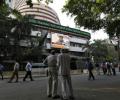
In the broader markets, BSE Midcap index slipped 0.3% whereas the BSE Smallcap index inched up by 0.2%
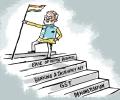
'The expectation was that Modi would become even bolder in his approach, and after only four months into his second term, we are starting to see evidence of this.'

IDS-2 and raids to uncover black money stash keep receipts flowing

The amount is around a fifth of the cumulative investment in fixed assets by these companies.

'I have very little faith in economists who tell me that demonetisation will reduce growth.' 'The greater effect of demonetisation is if it creates changes in the financial services system and gets people to shift from cash.' 'The economy is not a trained monkey that will jump around if you lower rates.'
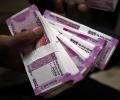
Centre took Rs 1,002 bn from here in 2017-18, sharply up from Rs 904 bn a year before and Rs 123.6 bn in FY14
The majority have stayed away from getting into cash handling.
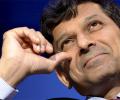
Reserve Bank of India (RBI) Governor Raghuram Rajan spoke on a host of issues at his last post-policy interaction with the media

'They will be able to ride over this immediate crisis and carry on, but they need to take corrective steps and these will have to be long term measures which must include working closely with state governments.'

The gap between Nifty's price-earnings multiple and economic growth is at a 12-year high

'You can't take money from Shaktikanta Das (the RBI governor) and give it to Nirmala Sitharaman (the Union finance minister). She will blow it away on Modi.'
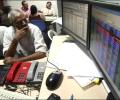
The Sensex ended down 134 points at 28,559 and the Nifty ended 35 points lower at 8,554

While the central bank had publicly cited only Rs 15.55 trillion of high value notes were cancelled, in an RTI reply to PTI, it had said the actual quantum of bills cancelled was much higher at Rs 20.51 trillion.
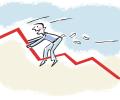
Amid slowing growth and low interest rates, investors will need to focus on stock-picking, suggests John Remmert.

Financials were among the top losers along with Sun Pharma and index heavyweight Reliance Industries
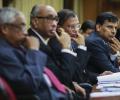
The RBI expects change, presumably commencing in the next Budget, but must hold its current view until this actually happens.

On the revenue front, the finance ministry was expecting higher proceeds from non-tax revenue.

'The RBI is something like a seat belt. As a driver, the driver being the government, it has the possibility of not putting on a seat belt but of course if you do not put on your seat belt you get into an accident and the accident can be quite severe,' Raghuram Rajan told CNBC TV18. 'The aim of the board is to be Rahul Dravid -- sensible, thoughtful and not, with due respect, Navjot Sidhu,' he added.

Economist Dale W Jorgenson declares that India is doing "very, very well" and forecasts that India might continue to outrun world economies, including China over the next many years.

'The cash part is the lower hanging fruit compared to the other sources.' 'To attack the cash part of black money, I can't think of anything else but demonetisation.'

Lower crude prices mean less government outlay for India,
Broader markets outperformed benchmark indices with BSE Midcap and BSE Smallcap up 0.5% and 0.6%.

Rajan, who has also served as chief economist at the International Monetary Fund (IMF), said he had no idea what statistics are pointing at currently and "a revamp" was needed "to really figure out what India's true growth rate is".

Can the finance minister manage our expectations, asks A K Bhattacharya.

All these measures will revitalise the manufacturing sector, which has been in doldrums.

Clearly, the extra borrowing of Rs 4.2 trillion the government has planned so far will not be enough to meet the shortfall in revenues which could be between Rs 8 trillion and Rs 10 trillion, points out A K Bhattacharya.
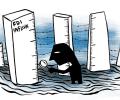
'An explanation perhaps lies in the culture of revisions that has grown deep roots in the government data collection system,' notes A K Bhattacharya.
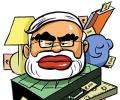
Declaring demonetisation a complete failure may turn out to be hasty, argues economist Ashok K Lahiri.

Smart investors fine tune their investments as per the Budget announcements to make the best possible use of tax deductions and other sops.
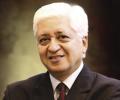
Attractions range from start-up challenges to non-monetary perks; employee stock options also play a role.

Besides 15 loan transactions to the Siva group of companies, the former directors also used unique methods to ensure the group did not get into the default list.

A strong set of industrial output numbers for January provided the perfect backdrop to reap more dividends, with the IIP having expanded 2.7 per cent year-on-year.
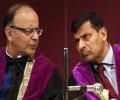
Arun Jaitley had a tough fiscal hill to climb.

If rate cuts are fully transmitted, and RBI continues to cut rates in 2016, and earnings growth picks up as well, current valuations may be justified. Otherwise, equity will remain over-valued, says Devangshu Datta.

'The Budget has maintained fiscal prudence while announcing a number of steps to boost growth, particularly in infrastructure and rural sectors.'
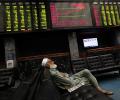
'Rawalpindi must downsize its quest for 'strategic depth' in Afghanistan and Kashmir,' suggests Matein Khalid.

Key relaxations traced in final regulations.
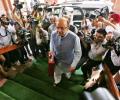
A strong showing will be vital to Narendra Modi's chances of a second term.

The risk-reward ratio could turn adverse for foreign investors if corporate earnings disappoint by wide margins, or if crude oil prices spike in the international market, putting pressure on the rupee-dollar exchange rate.

'The current crisis is one of incomes, driven by poor job growth, agrarian distress and poor investment sentiment,' notes Harsh Pati Singhania, director, JK Organisation.
